Institutional insights: Goldman Sachs SP500 Positioning & Key Levels 9/6/26

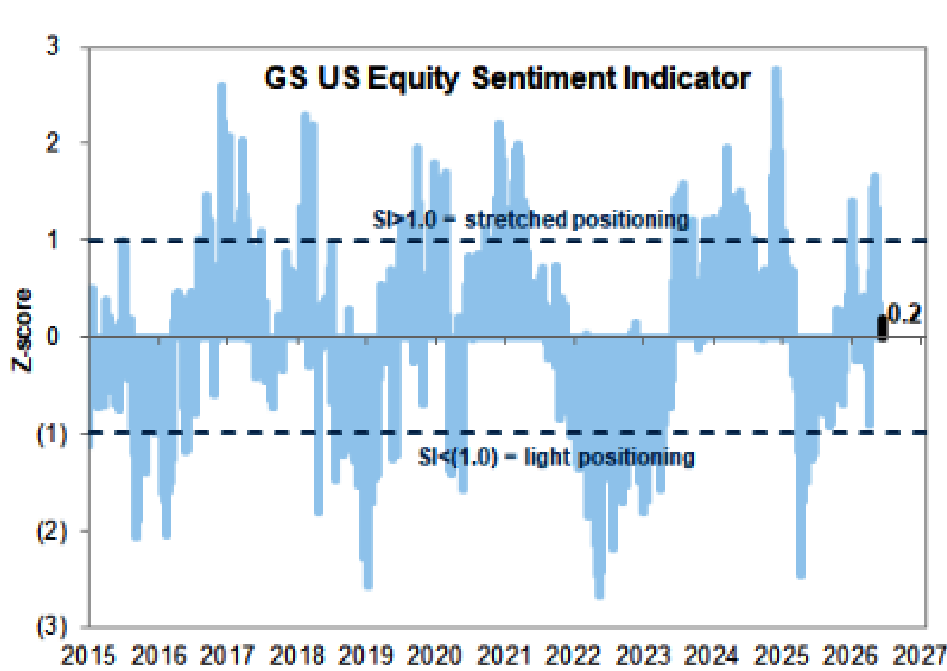
Prime Flows and Buybacks: Big Weekly Net Buying, Friday De-Risking, and Still-Active Corporate Demand
The latest flow data show a market that is not broadly de-risking, even though Friday’s price action felt risk-off. On the week, global equities saw the largest dollar net buying in nearly four months, a +1.5 standard deviation event on a one-year basis. Gross trading activity continued to rise, and the buying was driven by long buys outpacing short sales by 3.5 to 1. That is a very important distinction: hedge funds were adding longs rather than simply covering shorts.
All major regions were net bought, led in dollar terms by North America and EM Asia. In the US, single stocks saw the largest net buying in three months, a +1.1 standard deviation event on a one-year basis, also driven by long buys outpacing short sales by 2.7 to 1. This fits the broader “rotation, not liquidation” framework: investors are still adding equity exposure, but they are becoming more selective about where that exposure sits.
At the sector level, the breadth of buying was strong. Nine of eleven global sectors were net bought, led by Information Technology, Consumer Discretionary, Industrials, and Materials. The only net-sold sectors were Communication Services and Utilities. The sector mix is notable because it does not look like a defensive retreat. Buying in Consumer Discretionary, Industrials, Materials, and Technology suggests investors are still willing to underwrite growth and cyclicality, even after a hot NFP print and a violent factor unwind in AI, Semis, and speculative growth.
Consumer Discretionary: Five Straight Weeks of Net Buying, but Still Lightly Owned
Hedge funds net bought Consumer Discretionary for a fifth straight week, and the buying occurred across every major region. This is one of the cleaner examples of the broadening trade. Investors are adding to a sector that had lagged, where positioning remains depressed, and where a stronger macro backdrop can support earnings if the consumer holds up.
However, the sector is not crowded. Gross and net allocations to Consumer Discretionary, as a percentage of the global Prime Book, are still hovering near five-year lows. That means the recent buying is happening from very low ownership levels. This creates room for further catch-up if macro data remain strong, real income pressure does not worsen, and earnings revisions stabilize.
The caveat is that Consumer is not a uniform long. Retail remains stock-specific, with names like LULU and ULTA highlighting signs of slowing 2Q trends. Better demand appears to be in areas like gaming, lodging, leisure, select value retail, and cyclicals tied to a durable consumer rather than in broad discretionary exposure. Still, the positioning setup is favorable because investors remain underweight relative to the potential macro upside.
Industrials: Largest Net Buying in Nearly Five Months
Industrials were the standout sector. After being net sold in seven of the prior eight weeks, the sector became by far the most net bought this week, with the largest net buying in nearly five months, a +1.7 standard deviation event on a one-year basis. The buying was driven primarily by long buys, with some short covering as well, in a 2.2 to 1 ratio.
This is important because it shows investors are rotating into real-economy cyclicals rather than simply hiding in defensives. Industrials benefit from the capex supercycle, reshoring, defense, infrastructure, aerospace, transport improvement, and broader earnings upgrades outside Tech. Recent single-name strength in areas like SAIC, ODFL, JCI, and the Berkshire acquisition of TMHC has helped reinforce the sector’s relevance.
Positioning is not extreme on a one-year basis. Gross and net allocations to Industrials as a percentage of the US Prime Book are in the 43rd and 41st percentiles versus the past year. However, they are elevated versus the past five years, at the 88th and 74th percentiles, respectively. That means Industrials are not stretched in the recent-cycle context, but they are no longer deeply under-owned on a longer horizon. The sector can continue to work, but the easy underweight-covering phase may be more advanced than the one-year percentile suggests.
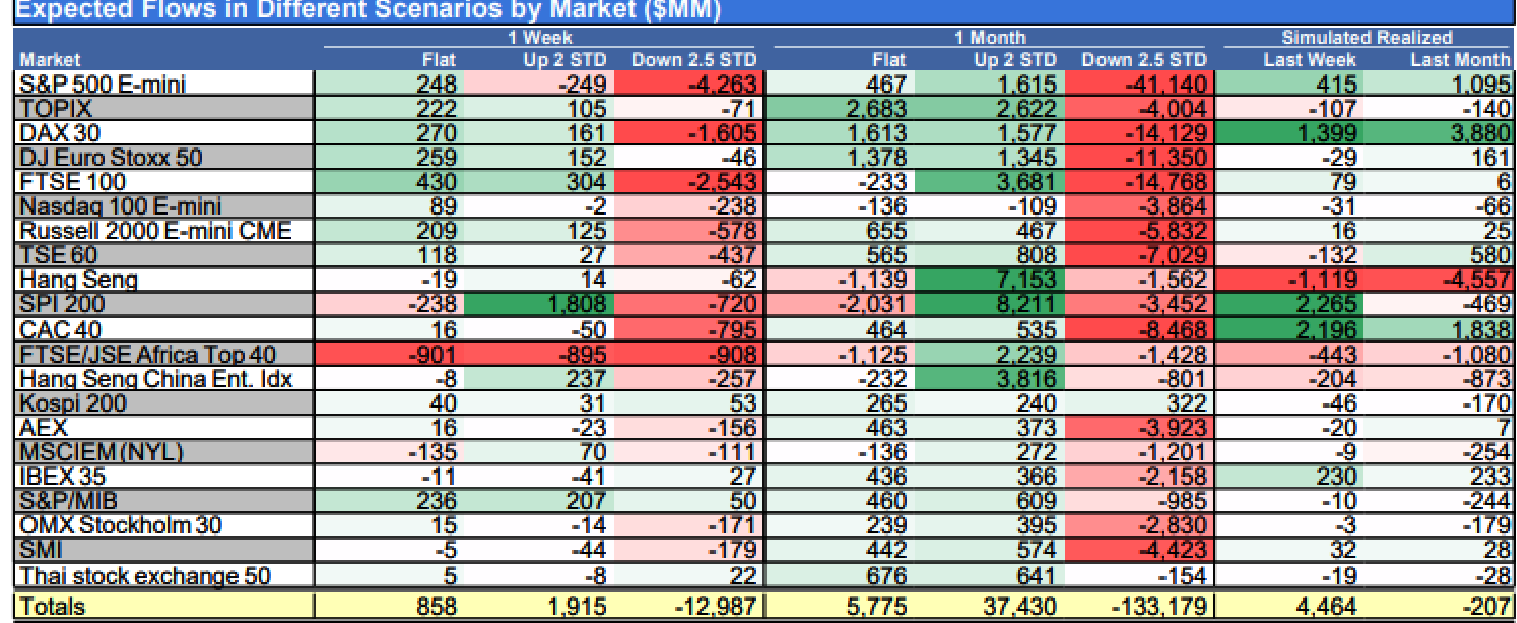
Information Technology: Net Bought, but De-Grossing Continues
Information Technology was net bought on the week, a +0.7 standard deviation event on a one-year basis, but the composition was not straightforward. The sector saw de-grossing for a second straight week, and for the fifth time in the last seven weeks. The net buying was driven entirely by short covers.
That is a critical point. The headline “Tech net bought” does not mean hedge funds were aggressively adding fresh long exposure to Tech. Rather, they were reducing shorts while also trimming gross. This is consistent with a volatile, crowded sector where managers are reducing overall risk but not necessarily turning outright bearish.
This also helps reconcile the weekly net-buying data with Friday’s sharp Tech selloff. On the week, short covering may have supported some parts of Tech, but by Friday the market saw both long selling and short selling in single names. That suggests a more active risk reduction into the weekend after the hot NFP print, AVGO disappointment, and AI narrative concerns.
Software: Allocation Has Recovered, but Still Low Versus Five-Year History
Software positioning has improved from the February lows but remains far from crowded on a longer-term basis. Net allocation to Software, as a percentage of total US Prime net exposure, now sits at 4.6%, compared with a five-year low of 1.3% at the end of February. That ranks in the 34th percentile versus the past year and only the 7th percentile versus the past five years.
This makes Software one of the more interesting positioning debates. On the one hand, recent software rallies have been sharp and sometimes squeeze-like, and the market remains highly selective due to AI disintermediation concerns. On the other hand, the group is still under-owned versus history, especially outside a few crowded winners. If upcoming software conferences and investor days produce positive AI monetization, data infrastructure, security, or margin narratives, the group has room to continue recovering.
The key is selectivity. Generic SaaS remains vulnerable if investors conclude AI compresses seat growth, pricing power, or application moats. But security, data infrastructure, observability, cloud optimization, and AI-enabling platforms may continue to attract capital.
Semis: Still Near Five-Year Highs in Net Allocation
Semis and Semiconductor Equipment remain the opposite of Software from a positioning perspective. Net allocation continues to hover near five-plus-year highs. This is why Friday’s selloff in SOX was so violent. The fundamental story may remain strong, but the positioning cushion is thin.
When a group is this owned, it does not take a collapse in fundamentals to trigger a drawdown. A good-but-not-good-enough AVGO print, a hot payrolls number, higher rates, issuance concerns, or AI narrative questions can be enough to force de-risking. The sector remains a core beneficiary of the capex supercycle, but tactically it is more vulnerable to mean reversion than Software, Financials, Health Care, or Consumer Discretionary.
This also reinforces the hedging argument. If Semis are a key funding source for new issuance and SpaceX-related demand, and if SMH put skew remains low, downside convexity in Semis can be an efficient hedge against a liquidity or positioning shock.
Friday Flow: Clear De-Risking Into the Weekend
The weekly picture was constructive, but Friday was clearly different. The global book was net sold, a -1.2 standard deviation move on a one-year basis, driven by both short selling and long selling in a 1.5 to 1 ratio. North America was the most net sold region, at -1.0 standard deviation, while Europe was the only net-bought region.
The US was net sold, a -0.9 standard deviation move, driven by long selling and short selling in a 1.7 to 1 ratio. Net selling was concentrated in single names, a significant -2.0 standard deviation event, where short selling exceeded long selling. This was partly offset by modest buying in macro products, driven by short covers exceeding long sales.
This confirms that Friday was not just a passive index move. There was active single-name de-risking, especially in crowded and high-beta pockets. However, the fact that the weekly data still show strong net buying means Friday did not erase the broader trend of hedge funds adding exposure and rotating into new leadership.
Buybacks: Still a Major Support, but Blackout Is Approaching
The buyback desk had another highly active week as the corporate open window continues. Flows finished at 1.8x versus 2025 YTD ADTV and 1.8x versus 2024 YTD ADTV, skewed toward Financials, Tech, and Consumer Discretionary. This remains a major support for the market, especially during periods of factor volatility.
Buybacks help explain why the broader index has been resilient despite Tech weakness and geopolitical/rates shocks. Corporate demand is steady, price-insensitive relative to many investors, and often concentrated in large liquid names. It can absorb selling pressure and reduce the likelihood that factor unwinds become systemic.
However, the buyback window is narrowing. Elevated volumes are expected to persist through this week before tapering after roughly June 15. The corporate blackout period is approaching, and while demand will be partially insulated by active 10b5-1 plans, buyback flows typically decline by around 30% during blackout periods. The effect will be most pronounced in July, when most corporates are expected to be in a closed period for the entire month.
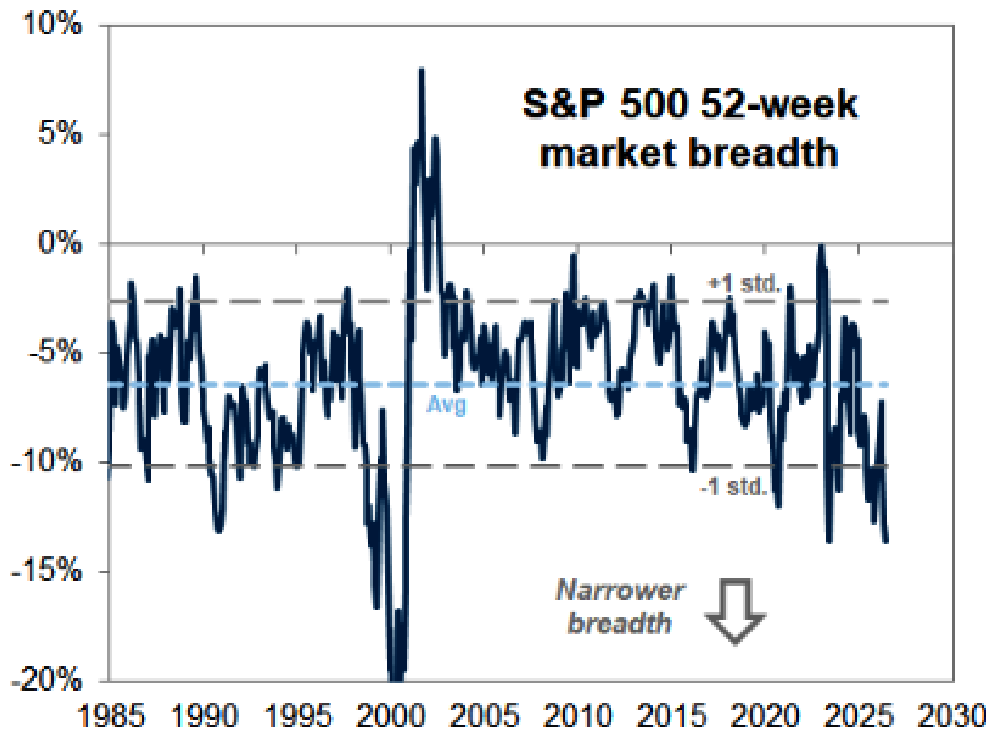
This matters for summer trading. Buybacks have been one of the key stabilizers of the market. As that stabilizer fades, the market may become more sensitive to IPO supply, rates volatility, CPI, oil, and geopolitical headlines. That does not mean the bull market ends, but it does mean liquidity gaps become more likely.
The flow picture supports the idea that the market is undergoing rotation rather than broad liquidation. Global equities saw the largest net buying in nearly four months, US single stocks saw the largest net buying in three months, and hedge funds added exposure across most sectors. Consumer Discretionary and Industrials are clear broadening beneficiaries, while Software remains under-owned versus history and Semis remain crowded near five-year highs.
The important nuance is that Friday showed real de-risking into the weekend, especially in US single names, after the hot NFP print and renewed pressure on AI/Semi leadership. But on the week, the broader investor behavior was still constructive.
The buyback bid remains powerful for now, running at 1.8x YTD ADTV, but it should begin to taper after mid-June as blackout approaches. That raises the importance of hedging. The market can continue higher into year-end, but with buybacks fading, issuance rising, Semis crowded, and macro catalysts still active, the preferred posture remains long delta / long vol: stay invested in the broadening bull market, but own protection against summer air pockets.
Disclaimer: The material provided is for information purposes only and should not be considered as investment advice. The views, information, or opinions expressed in the text belong solely to the author, and not to the author’s employer, organization, committee or other group or individual or company.
Past performance is not indicative of future results.
High Risk Warning: CFDs are complex instruments and come with a high risk of losing money rapidly due to leverage. 69% and 73% of retail investor accounts lose money when trading CFDs with Tickmill UK Ltd and Tickmill Europe Ltd respectively. You should consider whether you understand how CFDs work and whether you can afford to take the high risk of losing your money.
Futures and Options: Trading futures and options on margin carries a high degree of risk and may result in losses exceeding your initial investment. These products are not suitable for all investors. Ensure you fully understand the risks and take appropriate care to manage your risk.
Patrick has been involved in the financial markets for well over a decade as a self-educated professional trader and money manager. Flitting between the roles of market commentator, analyst and mentor, Patrick has improved the technical skills and psychological stance of literally hundreds of traders – coaching them to become savvy market operators!